
The John and Lillian Miles Lewis Foundation Organized the Trip to Inspire the Next Generation of Civic Leaders
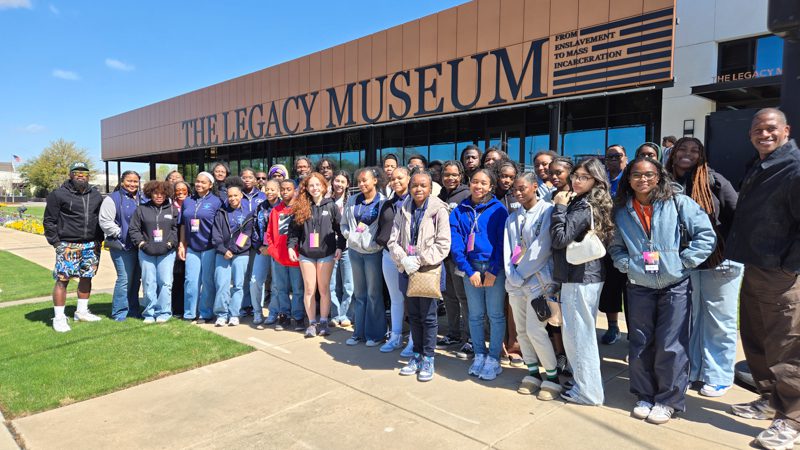
ATLANTA (MARCH 27, 2026) – The John and Lillian Miles Lewis Foundation made history come alive for 35 Atlanta-area students by leading them on the John Lewis Legacy Trail (March 12-14), an immersive educational experience honoring the life and legacy of John Lewis and the broader Civil Rights Movement.
Students from Cedar Grove High School, Drew Charter School, Druid Hills High School, and John Lewis Invictus Academy participated in the multi-city trip designed to broaden their understanding of the ongoing fight for civil rights and importance of protecting voting rights.
“Congressman John Lewis believed deeply in the power of young people to shape the future of our democracy,” said Michael E. Collins, Board Chair and Interim President of the John and Lillian Miles Lewis Foundation.
“Through the John Lewis Legacy Trail, these students walked in the footsteps of those who fought for justice, learned the history of the Civil Rights Movement firsthand, and learned that each of them has an important role in contributing to the work of building a more just and equitable society.
Students traveled through Montgomery, Selma and Troy — the birthplace of Congressman Lewis — and toured some of the most significant landmarks of the Civil Rights Movement across Alabama, including the Edmund Pettus Bridge, the site of Bloody Sunday in 1965. Just before walking across the Bridge, students met with Mayor Johnny “Skip” Moss, III, the mayor of Selma and Sheyann Webb, the youngest Foot Soldier, share her recollections of that historic day.
In Montgomery, the students visited the Equal Justice Initiative Legacy Sites, including the Legacy Museum and National Memorial for Peace and Justice, to connect the history of the Civil Rights Movement to current conversations around equality and justice. They also visited the Freedom Rides Museum and the Civil Rights Memorial Center.
A highlight of The John Lewis Legacy Trail was spending time with Congressman Lewis’ family at the farm where a young John Lewis once “preached” to the chickens. Congressman Lewis’ brothers and nephew shared family stories and emphasized how Lewis stayed deeply connected with his family, even after being elected to Congress.
The Legacy Trail provided students with a powerful opportunity to explore historic landmarks and stories that shaped the Civil Rights Movement. Through visits to significant historical locations and conversations with movement leaders and community luminaries – including individuals connected to pivotal events such as “Bloody Sunday” – students learned firsthand about the activism, courage, and resilience that defined the era.
“We are always looking for opportunities to help high school students learn about the Civil Rights Movement. That’s why working with the John and Lillian Miles Lewis Foundation and sponsoring the John Lewis Legacy Trail was an easy decision for us,” said Lecia Brooks, Interim Chief of Staff of the Southern Poverty Law Center.
“Once we met the students, however, we couldn’t have been more impressed. They asked the right questions, appreciated our shared history and found ways to apply it to their own lives as activists and advocates.”
“One moment I will remember most is visiting Selma and walking across the Edmund Pettus Bridge. It stood out to me because it showed how brave people were during the Civil Rights Movement and what they went through to fight for their rights,” said London Putmon, a tenth grader at Cedar Grove High School in Atlanta.
“Being there in person made the history feel real and meaningful. This trip helped me think more deeply about the Civil Rights Movement. Seeing the places in person made me realize how much people sacrificed for equality. It also showed me that it’s important for everyone to stand up against injustice and treat others fairly.” she added.
The John Lewis Legacy Trail reflects the Foundation’s broader mission to educate and inspire the next generation by connecting them with the history and values of the Civil Rights Movement. By walking a mile in the footsteps of those who fought for justice, the program aims to empower students to adapt the spirit of service, leadership and exercising civic rights – all which defined Congressman Lewis’ life.
The John Lewis Legacy Trail ended with a closing ceremony, where students laid a wreath at the Southern Poverty Law Center’s Civil Rights Memorial in Montgomery, Alabama. The Memorial chronicles the major events of the movement and records the names of 40 men, women and children who are considered martyrs of the movement.


ABOUT THE FOUNDATION
The John and Lillian Miles Lewis Foundation (JLMLF), was conceived by Congressman Lewis to carry on his and his wife’s passion for purposeful living, civic engagement and building the “beloved community,” and to inspire and support Good Trouble.
The John and Lillian Miles Lewis Foundation Board includes Michael E. Collins (Chair); Stephen L. McDaniel (Secretary); J. Veronica Biggins; Tharon Johnson; and Rodney E. Slater.
Instagram: johnlewisfoundation | Twitter: johnlewisorgs| Facebook: John and Lillian Miles Lewis Foundation
Contacts:
johnlewisfoundation@ssmandl.com
For General Information about JLMLF and to Schedule Interviews:
Neil Parekh (Communications)
John and Lillian Miles Lewis Foundation
neil@digimentors.group | info@jlmlf.org | 206.370.0058

 As a nation, if we care for the Beloved Community, we must move our feet, our hands, our hearts, our resources to build and not tear down, to reconcile and not to divide, to love and not to hate.